Introduction
A tank trap is one of the oldest and most effective defensive measures used in military engineering to stop or delay armored vehicles. But what is a tank trap exactly, and how does it differ from other barriers? From the battlefields of World War II to modern conflict zones, these obstacles have proven their value in denying terrain and channeling enemy forces into kill zones.
In this comprehensive guide, we explore the definition, mechanics, types, and deployment of tank traps. Whether you are a military enthusiast, a defense professional, or simply curious about anti-tank obstacles, this article covers everything you need to know about these formidable defensive tools.
What Is a Tank Trap? Definition and Purpose
So what is a tank trap? It is any obstacle specifically designed to stop, disable, or delay tracked and wheeled armored vehicles. Unlike standard barriers that merely block passage, a tank trap exploits the physical vulnerabilities of tanks and armored personnel carriers — their ground pressure, ground clearance, traction, and weight distribution.
The primary purpose is to prevent armored vehicles from advancing through key terrain. Tank traps are used in military defense to protect strategic locations such as bases, bridgeheads, mountain passes, urban perimeters, and border crossings. They serve several critical functions:
- Denial of terrain: Making an area impassable to armored vehicles forces enemy forces into predictable routes.
- Channeling: Funneling enemy armor toward prepared kill zones where anti-tank weapons are positioned.
- Delay: Slowing offensive momentum so defenders have time to react, reposition, or call in reinforcements.
- Attrition: Damaging or immobilizing vehicles, reducing the enemy's armored strength before the main battle.
Throughout history, these obstacles have been constructed from concrete, steel, earth, and even vegetation. Their design has evolved to counter increasingly capable armored vehicles, but the core principle remains unchanged: create an obstacle that the vehicle cannot cross, cannot easily destroy, and cannot bypass without significant delay.
How Do Tank Traps Stop Vehicles?
Understanding how a tank trap stops vehicles requires basic knowledge of armored vehicle physics. These obstacles disrupt vehicle movement through several mechanisms:
Tip-Over Mechanism
Many obstacles, such as the Czech hedgehog, are designed to tip over when a vehicle drives over them. The device rotates under the vehicle's weight, lifting the tracks off the ground and causing the vehicle to lose traction. Once the tracks lose purchase, the vehicle becomes immobilized — unable to push or pull itself free without recovery equipment.
Hull Damage and Belly Attack
Some obstacles are designed to damage the underside of the vehicle. Dragon's teeth and concrete pyramids can punch through the belly armor of a tank if the vehicle attempts to climb over them. A ruptured fuel tank, damaged transmission, or breached crew compartment can immobilize or destroy the vehicle.
Track Entanglement
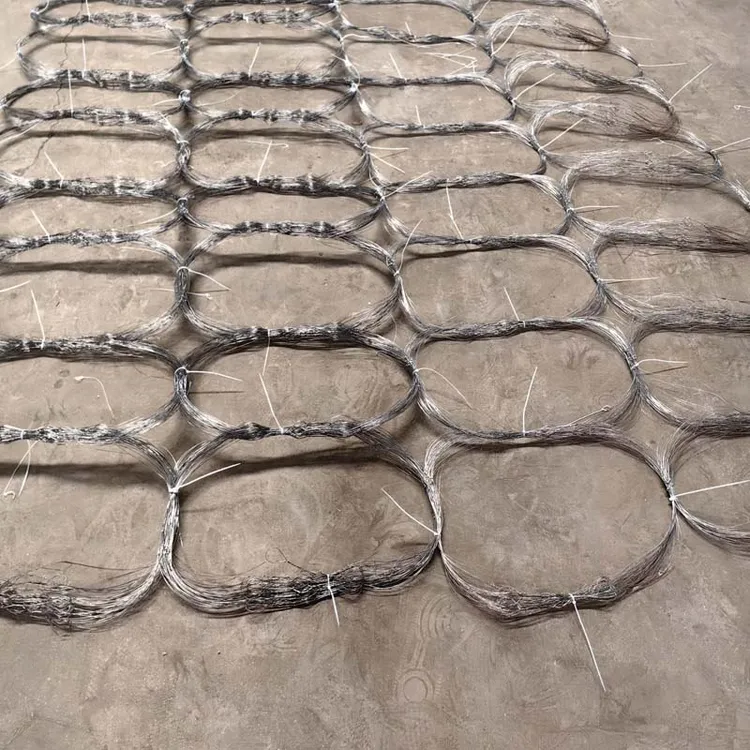
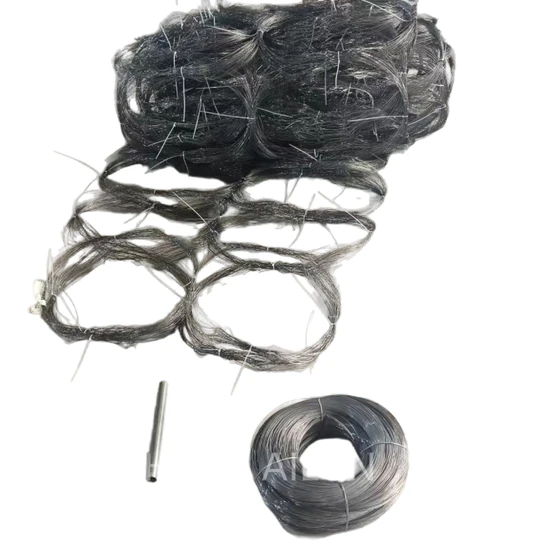
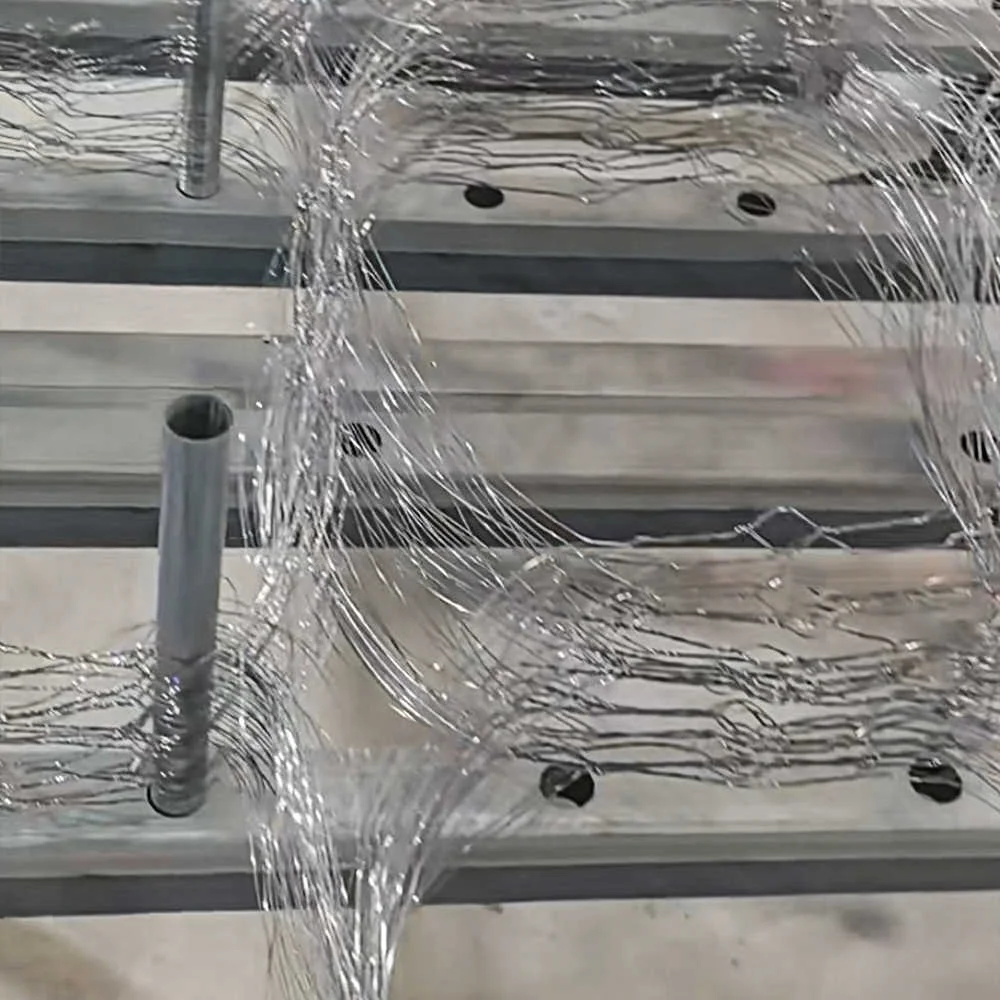
A tank trap net is a specialized obstacle made from heavy-duty steel cables or synthetic ropes. When a vehicle drives over the net, its tracks become entangled in the mesh, jamming the drive sprocket and idler wheels. The net wraps around the running gear, stopping the vehicle dead in its tracks. Tank trap nets are particularly effective because they are lightweight, portable, and quick to deploy compared to concrete barriers.
Vertical Face Obstruction
Deep trenches, steep embankments, and vertical concrete walls create a physical barrier that most armored vehicles cannot climb. Tanks have limited approach and departure angles — typically 25 to 35 degrees. A vertical face exceeding the vehicle's ground clearance (usually 0.4 to 0.5 meters for main battle tanks) will stop forward movement entirely.
Common Types of Tank Traps Used by Modern Militaries
Modern militaries employ a variety of tank trap types, each with specific advantages for different tactical scenarios. Here are the most common types used by armed forces around the world:
Czech Hedgehog
The Czech hedgehog is the most recognizable tank trap design. Made from three steel beams or rails welded together at their midpoints to form a six-pointed star, this obstacle was widely used during World War II and remains in use today. When a vehicle hits a Czech hedgehog, the obstacle rolls under the hull, lifting the tracks and immobilizing the vehicle. A typical Czech hedgehog weighs between 200 and 350 kg, making it portable enough for field deployment by a small team.
Dragon's Teeth
Dragon's teeth are concrete pyramid-shaped obstacles, typically 0.9 to 1.5 meters tall, arranged in staggered rows across a defensive line. They are designed to stop tanks by forcing them to either climb over and risk belly damage or navigate through narrow gaps that channel them into anti-tank weapon kill zones.
Tank Trap Nets
Also known as anti-tank nets or vehicle entanglement obstacles, tank trap nets are modern, lightweight devices made from high-tensile steel cables or synthetic fibers. These nets are spread across roads, trails, or open terrain and anchored at the edges. When a vehicle drives onto the net, cables wrap around the tracks or wheels, causing mechanical jamming. Tank trap nets are valued for their portability — a single net system can be carried in a backpack and deployed in minutes.
Tank Ditches
An anti-tank ditch is a wide, deep trench excavated across the expected axis of enemy advance. A typical tank ditch is 4 to 6 meters wide and 2 to 3 meters deep, with steep vertical sides.
Concrete Barrier Walls
Modern concrete barriers — such as the "Jersey barrier" or purpose-built anti-tank walls — are used for both traffic control and military defense. These barriers can be precast and transported to the deployment site, then linked together to form continuous defensive lines.
Tank Trap vs Anti-Tank Barrier: What Is the Difference?
Many people use the terms interchangeably, but there are important distinctions when comparing a tank trap vs anti-tank barrier. While all tank traps are anti-tank barriers, not all anti-tank barriers are tank traps.
| Feature | Tank Trap | Anti-Tank Barrier |
|---|---|---|
| Primary Function | Stop or disable vehicles through mechanical engagement | Block or restrict vehicle movement through any means |
| Design | Often movable, reusable, or collapsible | Often fixed, permanent construction |
| Examples | Czech hedgehog, tank trap net, portable spikes | Concrete wall, anti-tank ditch, dragon's teeth |
| Deployment Speed | Rapid (minutes to hours) | Slow (hours to weeks) |
| Portability | Light to medium weight, transportable | Heavy, often cast in place |
The key difference lies in intent and design philosophy. A tank trap is specifically engineered to engage and disable the vehicle through its own movement. An anti-tank barrier is a broader category that includes any obstacle designed to prevent or hinder armored vehicle movement, including walls, ditches, minefields, and terrain modifications.
How Heavy Is a Tank Trap and How Much Does It Cost?
Two of the most common practical questions about these obstacles are their weight and cost. These factors directly influence procurement, logistics, and tactical planning.
How Heavy Is a Tank Trap?
How heavy is a tank trap? The answer varies dramatically by type and materials. Here is a breakdown of typical weights:
- Czech hedgehog (steel): 200 – 350 kg — portable with a small crane or 4-person team
- Dragon's tooth (concrete): 500 – 2,500 kg — requires heavy equipment to place
- Tank trap net (cable): 15 – 50 kg — easily carried by one or two soldiers
- Precast concrete barrier: 2,000 – 6,000 kg — requires forklifts or cranes
- Anti-tank ditch (excavated): N/A — measured in cubic meters of earth moved
Knowing how heavy is a tank trap helps military planners choose the right type for each mission. Lightweight options like tank trap nets have revolutionized field deployment, allowing rapid obstacle creation without heavy engineering equipment.
How Much Does a Tank Trap Cost?
Cost depends on materials, fabrication complexity, and quantity. Approximate price ranges:
- Czech hedgehog: $200 – $800 each (fabricated steel)
- Dragon's teeth (precast): $150 – $500 per unit
- Tank trap net system: $1,000 – $5,000 per complete kit
- Precast concrete barrier: $300 – $1,200 per linear meter
- Anti-tank ditch: $50 – $200 per cubic meter of excavation
When budgeting for a defensive position, planners must consider not only the unit cost but also transportation, installation labor, and potential future removal costs.
How to Deploy a Tank Trap in the Field
Knowing how to deploy a tank trap in the field is a fundamental skill in military engineering. Proper deployment maximizes effectiveness and minimizes the enemy's ability to bypass or clear the obstacle.
Site Selection
The first step is identifying terrain that naturally restricts vehicle movement: narrow passes, bridges, fording points, road junctions, and urban choke points. Tank traps should be placed where the terrain on both sides is already difficult or impossible for vehicles to traverse, preventing easy bypass.
Placement and Spacing
Different tank trap types require different spacing:
- Czech hedgehogs: Placed 3–5 meters apart in staggered rows, offset so vehicles cannot drive between them
- Dragon's teeth: Typically arranged in 3–5 staggered rows with 2–3 meter spacing between individual teeth
- Tank trap nets: Spread flat across the full width of the route, anchored at 2-meter intervals along all edges
- Concrete barriers: Butted end-to-end or with minimal gaps for drainage, often backed by earth berms
Integration with Other Defenses
A tank trap is rarely deployed alone. It should be integrated into a combined arms obstacle plan that includes:
- Anti-tank guided missile (ATGM) positions covering the obstacle
- Machine gun and mortar fire zones to prevent engineer breaching
- Minefields in the approaches or gaps between obstacles
- Concertina wire and infantry obstacles to prevent dismounted breaching
Camouflage and Concealment
Modern tank traps should be camouflaged to delay detection. Nets can be covered with local vegetation, concrete obstacles can be painted in disruptive patterns, and earth tones help the obstacles blend with the surrounding terrain.
Do Tank Traps Still Work in Modern Warfare?
With modern advances in armor technology, precision-guided munitions, and unmanned ground vehicles, a natural question arises: do tank traps work in contemporary warfare? The answer is a definitive yes — but their role has evolved.
Effectiveness Against Modern Tanks
Do tank traps work against modern main battle tanks like the M1 Abrams, Leopard 2, and T-90? While these vehicles are heavier and more powerful than their World War II predecessors, they are not immune. A well-designed obstacle exploits the same fundamental vulnerabilities that have always existed:
- Ground pressure: Modern tanks still have ground pressure of 0.8–1.2 kg/cm². A properly designed ditch will bog down any vehicle regardless of armor thickness.
- Ground clearance: Even the most advanced tanks have only 0.4–0.5 meters of clearance. A concrete barrier or hedgehog that contacts the belly will damage vital components.
- Track vulnerability: Tracks remain the single most vulnerable component of any tracked vehicle. A tank trap net that entangles the running gear will immobilize a $10 million tank just as effectively as a $200 steel hedgehog.
Limitations and Countermeasures
Modern militaries have developed countermeasures against these obstacles:
- Armored engineer vehicles with bulldozer blades and bridge layers
- Mine-clearing line charges that can destroy certain obstacles
- Precision artillery and airstrikes to breach defensive lines
- Unmanned ground vehicles for obstacle reconnaissance and clearance
Despite these countermeasures, these obstacles remain effective because they consume time and resources. Every hour an enemy spends clearing obstacles is an hour the defender can use to reinforce positions, reposition forces, or launch counterattacks. In the Ukraine conflict, both sides have extensively used all types — from dragon's teeth on the front lines to portable hedgehogs in urban defense — proving that these ancient obstacles remain relevant in 21st-century warfare.
Cost-Effectiveness
Perhaps the strongest argument for these devices is their cost-effectiveness. A $500 concrete dragon's tooth can immobilize a $5 million armored vehicle. A $2,000 tank trap net can stop a $10 million main battle tank. This asymmetric cost ratio makes them an attractive option for budget-constrained defense forces and non-state actors alike.
Conclusion
A tank trap remains one of the most effective and cost-efficient defensive measures available to military forces. From the classic Czech hedgehog that stopped German Panzer divisions in World War II to modern tank trap nets that can be carried in a backpack and deployed in minutes, these obstacles have proven their enduring value across generations of warfare.
Key takeaways from this guide:
- An anti-tank obstacle is specifically designed to stop or disable armored vehicles by exploiting their physical vulnerabilities
- These devices serve multiple tactical functions: denying terrain, channeling enemy forces, delaying advances, and attriting armored strength
- Modern types range from concrete dragon's teeth and steel hedgehogs to portable entanglement nets
- While heavy barriers are expensive and hard to transport, modern tank trap nets offer a lightweight, cost-effective alternative
- These obstacles remain highly relevant in modern warfare, as demonstrated by their extensive use in contemporary conflicts
Understanding what a tank trap is, how it works, and how to deploy it effectively is essential knowledge for anyone involved in military planning, defense procurement, or tactical operations. As armored vehicle technology continues to advance, obstacle design will also evolve — but the fundamental principle of using the vehicle's own weight and momentum against it will never become obsolete.
![Anti-Tank Barriers Buyer's Guide: Types, Costs & Military Procurement [2026]](/images/anti-tank-barriers-hero.webp)