Introduction
Military defense facility obstacles are a critical component of modern military strategy, providing the first line of defense for bases, borders, and tactical positions. This complete classification guide explores the diverse types of military defense obstacles used to protect personnel, equipment, and infrastructure from hostile threats. Understanding how these obstacles are categorized — by purpose, design, material, and deployment method — is essential for defense planners, security professionals, and military engineers.
The classification of military defense facility obstacles encompasses a wide spectrum of barriers, from ancient natural defenses to cutting-edge low-visibility systems. Whether the objective is to stop armored vehicles, slow infantry advances, or secure a perimeter, each obstacle type serves a specific tactical role. This guide provides a systematic breakdown of obstacle categories, helping readers understand which solutions are best suited for different operational scenarios.
Throughout this article, we will examine the complete taxonomy of defense facility obstacles, covering anti-tank barriers, anti-personnel obstacles, natural defenses, modern rapid-deployment systems, and the strategic principles behind layered perimeter security. By the end, you will have a comprehensive understanding of how military forces around the world classify and deploy obstacles to achieve tactical superiority.
Classification by Purpose: Anti-Tank vs Anti-Personnel Obstacles
The most fundamental way to classify military defense obstacles is by their intended target: vehicles or personnel. This binary classification forms the backbone of all defensive planning, as the physical requirements for stopping a multi-ton armored vehicle are vastly different from those needed to impede a dismounted soldier. Understanding these differences is crucial when designing an effective layered defense.
Anti-tank obstacles are engineered to destroy, disable, or delay armored vehicles such as main battle tanks, armored personnel carriers, and infantry fighting vehicles. These obstacles must withstand enormous impact forces — a single main battle tank can weigh over 60 tons and generate tremendous kinetic energy. Anti-tank barriers are typically constructed from reinforced concrete, heavy steel, or specialized wire systems designed to entangle tank tracks and running gear. Common examples include concrete dragon's teeth, steel Czech hedgehogs, anti-tank ditches, and wire-based entanglement systems like the MZP Putanka tank trap net. These defense facility obstacles are often deployed in depth, with multiple rows and staggered patterns to prevent vehicles from finding a clear path through.
Anti-personnel obstacles, by contrast, are designed to slow, channel, or deter foot soldiers. While they rarely need to withstand the same magnitude of force as anti-tank barriers, they must be difficult to breach with hand tools or small arms. Anti-personnel obstacles include concertina wire entanglements, triple-standard concertina fences, abatis (felled trees with sharpened branches pointing toward the enemy), and various forms of fencing. These obstacles are typically lighter, more portable, and easier to deploy in large quantities than their anti-tank counterparts. Modern anti-personnel barriers often incorporate sensors and surveillance technology to detect intrusion attempts.
The key differences between these two categories extend beyond physical strength. Anti-tank obstacles generally require heavy machinery for installation and are more permanent in nature, while anti-personnel obstacles can often be deployed rapidly by small teams. In a comprehensive defense plan, both types work in concert — anti-tank obstacles stop vehicular assault, while anti-personnel obstacles prevent infantry from exploiting gaps or conducting breaching operations.
Anti-Tank Obstacles: Design and Function
Anti-tank obstacles are specifically designed to counter the threat of armored vehicles, which represent the primary offensive capability of modern ground forces. These military defense obstacles fall into several distinct categories based on their mechanism of action: barriers that physically block vehicle movement, obstacles that disable or damage vehicles, and entanglement systems that trap running gear.
Concrete barriers such as dragon's teeth are among the most recognizable anti-tank obstacles. Dragon's teeth are pyramid-shaped concrete projections arranged in staggered rows, typically four to five feet in height. Their shape and spacing are calculated to either tip a tank onto its belly (rendering it immobile) or force the vehicle to expose its vulnerable underside to defensive fire. These barriers are extremely durable and resistant to enemy fire, but require significant time and concrete to install.
Steel obstacles like the Czech hedgehog — a six-pointed steel beam structure — are lighter and more portable than concrete alternatives. Originally developed for World War II anti-invasion defenses, hedgehogs can be rapidly deployed and repositioned. Modern variants use collapsible designs for easier transport. Another common steel obstacle is the anti-tank rail or beam barrier, consisting of steel rails driven into the ground at angles to create an impassable barrier for vehicles.
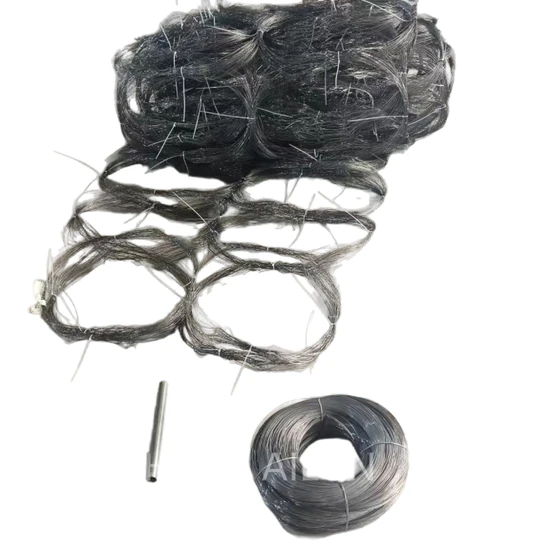
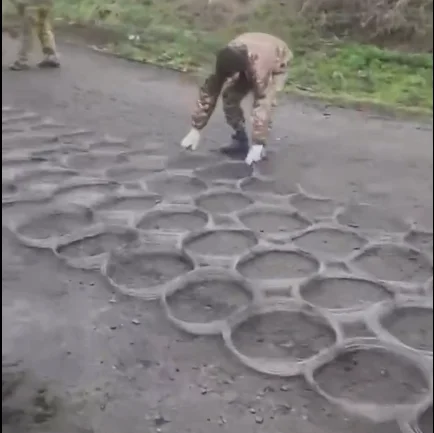
Wire-based anti-tank obstacles represent a more recent innovation in defense facility obstacles. Systems like the MZP Putanka (tangle net) consist of high-tensile steel wire nets designed to entangle tank tracks, drive sprockets, and road wheels. When a vehicle drives over the net, wire strands wrap around the running gear, progressively tightening until the vehicle is immobilized. Unlike concrete or steel barriers, wire obstacles are lightweight, low-visibility, and can be deployed covertly without heavy equipment. This makes them increasingly popular for modern rapid-deployment scenarios where concealment and speed are priorities.
Anti-Personnel Obstacles: Design and Function
Anti-personnel obstacles serve a distinct but equally vital role in the classification of military defense obstacles. Where anti-tank barriers focus on stopping heavy vehicles, anti-personnel obstacles are optimized to impede, channel, and delay dismounted infantry. These obstacles are typically lighter, more portable, and designed to be difficult to breach with standard-issue military tools such as wire cutters, demolition charges, or breaching equipment.
Concertina wire is the most ubiquitous anti-personnel obstacle in modern military use. Manufactured from high-tensile galvanized steel, concertina wire consists of coils of razor-sharp blades attached to a wire core. When deployed as triple-standard concertina fences (TSCF), these coils create a formidable barrier that is extremely difficult to cross without specialized equipment. Standard military concertina wire is typically deployed in overlapping configurations to eliminate gaps, with each coil spanning approximately 20 meters when fully extended.
Entanglement obstacles include various configurations of barbed wire and razor wire designed to ensnare personnel and equipment. While traditional barbed wire remains in use for permanent installations, modern military forces increasingly favor razor wire (also known as barbed tape) for its superior cutting action and difficulty of removal. Entanglement obstacles are often deployed in belts 10 to 30 meters deep, creating a zone that attackers must cross under defensive fire.
Abatis and felled-tree obstacles represent a hybrid category — natural materials used in man-made configurations. Trees are felled with their branches interwoven and sharpened, creating a dense tangle that is extremely difficult to penetrate. While primarily anti-personnel in effect, large abatis can also impede wheeled vehicles. These obstacles have the advantage of being quickly constructible from locally available materials, making them valuable for field fortifications where manufactured barriers may not be available.
Main Types of Military Defense Facility Obstacles
The complete taxonomy of military defense facility obstacles encompasses three broad material and design categories: man-made structural obstacles, natural and reinforced obstacles, and explosive/non-explosive barrier systems. Each category offers distinct advantages in different tactical situations, and modern defensive planning typically incorporates elements from all three to create a comprehensive defense network.
Military defense obstacles can be classified not only by their target (anti-tank vs. anti-personnel) but also by their construction method, deployment timeline, and intended permanence. Permanent obstacles are built into fixed defensive positions and are designed to last for years or decades. Temporary obstacles are deployed for specific operations and can be removed or repositioned as tactical requirements change. Portable obstacles offer maximum flexibility, allowing forces to rapidly adapt their defensive posture in response to enemy movements.
The classification system also considers the visibility and detectability of obstacles. High-visibility obstacles serve as a deterrent and psychological barrier, signaling to an attacker that the position is defended. Low-visibility obstacles are designed to be concealed until the moment of contact, maximizing their surprise effect and making them difficult to detect and neutralize before an assault begins. Understanding these classification dimensions is essential for selecting the right obstacle mix for any given defensive scenario.
In the following subsections, we explore each major category of defense facility obstacles in detail, examining their construction, deployment methods, and tactical applications.
Man-Made Structural Obstacles
Man-made structural obstacles are purpose-built barriers constructed from materials such as concrete, steel, earth, and specialized alloys. These represent the most common and visible category of military defense obstacles and include a wide range of designs optimized for different defensive requirements.
Concrete obstacles dominate the permanent defense landscape. Dragon's teeth, as mentioned earlier, are among the most cost-effective and durable anti-tank barriers available. Tetrahedrons and cube obstacles are variants that serve similar functions, often used in anti-landing craft defenses or to block roads and urban chokepoints. Concrete barriers are valued for their longevity — properly constructed examples can remain effective for decades with minimal maintenance. However, they require substantial construction time and resources, making them unsuitable for rapid-deployment scenarios.
Earth and berm obstacles utilize locally available soil to create defensive barriers. Anti-tank ditches, when combined with raised earth berms on the defensive side, create obstacles that are difficult for vehicles to cross and provide protected firing positions for defenders. The sheer volume of earth required means these obstacles are typically constructed using engineer equipment such as bulldozers and excavators. Modern variants incorporate geotextile reinforcement and drainage systems to improve durability in adverse weather conditions.
Steel and fabricated obstacles offer a balance between permanence and portability. The Czech hedgehog, beam barriers, and fabricated steel gates fall into this category. These defense facility obstacles can be manufactured in advance, transported to the deployment site, and installed relatively quickly compared to poured concrete alternatives. Many modern steel obstacles feature modular designs that allow for rapid assembly in the field using only hand tools, making them ideal for expeditionary forces that need to establish defensive positions on short notice.
Natural and Reinforced Obstacles
Natural obstacles leverage terrain features to create defensive barriers without the need for extensive construction. Rivers, mountains, forests, swamps, and steep slopes have been used as military defense obstacles throughout history. When reinforced with man-made elements, these natural features become even more effective components of a comprehensive defense system.
Water obstacles such as rivers, lakes, and flooded areas present significant challenges to both vehicles and personnel. A river that is too deep to ford and too wide to bridge under fire becomes a formidable defensive barrier. Military engineers often enhance water obstacles by creating deliberate flooding through dam operations or by constructing antitank ditches connected to natural water sources. The primary advantage of water obstacles is their natural deterrent effect — water is universally recognized as a barrier, and crossing it requires specialized equipment that slows any assault.
Vegetation and forest obstacles include dense woodlands, bamboo thickets, and deliberately created abatis. Dense forest can stop or severely slow vehicle movement, channeling attackers into predictable routes where they can be engaged by defensive fire. Reinforced forest obstacles combine felled trees with wire entanglements and mines to create denser, more permanent barriers. In jungle environments, the natural vegetation itself can serve as an obstacle, with thick undergrowth reducing visibility and slowing movement to a crawl.
Terrain-enhanced obstacles use the existing topography as a force multiplier. Steep reverse slopes, ravines, and cliff faces are natural vehicle obstacles that can be reinforced with minimal additional construction. The key advantage of these defense facility obstacles is their low cost and immediate availability — the terrain is already there, and the defender needs only to integrate it into the overall defensive plan. However, natural obstacles have the disadvantage of being fixed in location; the defender cannot reposition a river or mountain to meet changing tactical requirements.
Explosive and Non-Explosive Barriers
Explosive and non-explosive barriers form a specialized category within the classification of military defense obstacles. While structural and natural obstacles rely on physical blocking or entanglement, these barriers use either explosive force or non-lethal effects to create defensive zones that are dangerous or impassable to enemy forces.
Minefields are the most common explosive barrier type. Anti-tank mines are designed to disable or destroy vehicles by targeting track systems or hulls with shaped-charge warheads. Anti-personnel mines, now restricted under international treaties such as the Ottawa Treaty, were historically used to protect anti-tank minefields from manual clearance. Modern militaries have largely replaced persistent anti-personnel mines with non-persistent alternatives or remotely delivered mine systems that can be deactivated or self-destruct after a set period.
Non-explosive barriers include a range of modern innovations designed to provide obstacle effects without the legal and humanitarian complications of explosive munitions. These include deployable vehicle arrest systems, portable vehicle barriers, and advanced wire entanglement systems that can immobilize vehicles without explosive force. The MZP Putanka wire net is a prime example — it uses high-tensile steel wire to entangle tank running gear through mechanical action alone, achieving the same tactical effect as a mine without the risk of civilian casualties or long-term contamination.
military defensive barriers including wire mesh, concrete, and concertina barriers" class="w-full rounded-lg">
Hybrid obstacle systems combine explosive and non-explosive elements for enhanced effectiveness. For example, a defensive belt might include a minefield in front of a wire entanglement, with anti-tank ditches and dragon's teeth creating a multi-layered barrier that attackers must breach sequentially. The combination of different barrier types forces the attacker to bring multiple breaching capabilities, complicating their logistics and slowing their advance. Modern defense facility obstacles increasingly favor these hybrid approaches for their superior tactical flexibility.
Natural vs Man-Made Obstacles: Pros and Cons
One of the most important considerations in military defensive planning is the choice between natural and man-made military defense obstacles. Both categories have distinct advantages and limitations that make them suitable for different tactical scenarios. Understanding these trade-offs allows defense planners to create obstacle plans that maximize effectiveness while minimizing resource expenditure.
Natural obstacles — terrain features such as rivers, mountains, forests, and swamps — offer the fundamental advantage of being immediately available at no construction cost. A river that blocks an approach route requires no concrete, no steel, and no engineer hours to create. Natural obstacles also blend seamlessly into the environment, providing no visual indication of the defensive plan. However, natural obstacles are fixed in location and cannot be repositioned to meet changing tactical needs. An attacker can study terrain maps and plan their assault route to avoid the most difficult natural obstacles, potentially negating their defensive value.
Man-made obstacles offer precisely the opposite advantages and disadvantages. They can be placed exactly where the defender needs them, tailored to specific threats, and repositioned as the tactical situation evolves. However, they require significant resources — materials, construction time, transportation, and engineer expertise — to create and maintain. The cost of deploying large-scale man-made obstacles can be substantial, particularly for permanent concrete installations. Modern modular and portable obstacle systems help mitigate these costs, but the resource trade-off remains a central consideration in defensive planning.
The most effective defensive plans typically integrate both natural and man-made obstacles in a complementary manner. Natural obstacles are used to shape the battlefield, channeling attackers toward prepared kill zones where man-made obstacles and defensive fires await. Man-made obstacles fill gaps in the natural defensive line, reinforce weak points, and create depth in the defense. This integrated approach maximizes the strengths of each category while minimizing their respective weaknesses.
When to Use Natural Obstacles
Natural obstacles are most valuable in defensive scenarios where resources are limited, time is constrained, or operational security demands minimal visible preparation. Understanding when to rely on natural terrain features rather than constructed barriers is a key skill for military engineers and defensive planners evaluating military defense obstacles.
Strategic defense lines frequently incorporate natural obstacles as their primary barrier. The Maginot Line, while famous for its concrete fortifications, was deliberately sited along the Rhine River and Vosges Mountains to leverage natural defensive advantages. Modern defensive positions continue this tradition, with rivers and mountain ranges forming the backbone of many national defense strategies. Natural obstacles are particularly effective in the strategic role because they cannot be bypassed or destroyed by enemy action — a mountain range remains an obstacle regardless of what the attacker does.
Tactical situations favoring natural obstacles include delaying actions, where the defender needs to slow an advancing enemy without committing to a fixed battle. A small force equipped with demolitions can create obstacles from natural materials — felling trees across roads, breaching dams to flood low ground, or using explosives to trigger landslides that block mountain passes. These actions create defense facility obstacles rapidly, using minimal resources, and deny the enemy the use of key terrain.
The primary limitation of natural obstacles is their predictability. Because terrain features are mapped and known to both sides, an attacker can plan their approach to avoid the most significant natural barriers. Natural obstacles also cannot be adjusted to respond to enemy tactics — a river crossing can be forced with bridging equipment regardless of how formidable the river appears. This predictability means natural obstacles should rarely be relied upon as the sole defensive barrier, but rather as one component of a layered defense.
When to Use Man-Made Obstacles
Man-made obstacles are the preferred choice when the defender needs to control precisely where and how an attack develops. Unlike natural obstacles, which are fixed features of the terrain, man-made defense facility obstacles can be positioned to seal gaps, create kill zones, and respond to specific intelligence about enemy capabilities and planned avenues of approach.
Perimeter defense is the scenario where man-made obstacles truly excel. Military bases, forward operating bases, and critical infrastructure require 360-degree protection that natural terrain rarely provides. Man-made obstacles such as triple-standard concertina fences, anti-tank ditches, and vehicle barriers are deployed to create a continuous defensive ring around the protected facility. These obstacles are designed to slow an attacker long enough for defensive forces to respond, while channeling any breach attempt into areas covered by pre-planned defensive fires.
Urban and built-up areas present unique challenges where man-made obstacles are essential. Buildings, rubble, and street barricades create military defense obstacles that channel vehicle movement along predictable routes. Anti-tank barriers at key intersections prevent armored vehicles from maneuvering freely, while wire obstacles in alleys and open spaces restrict infantry movement. Urban defensive positions benefit enormously from man-made obstacles because the built environment itself provides cover for the defender while restricting attacker mobility.
Man-made obstacles also provide the critical advantage of depth in a defensive zone. While a natural obstacle like a river provides a single barrier line, man-made obstacles can be deployed in successive belts, creating a defensive zone that attackers must breach sequentially. Each obstacle belt forces the attacker to pause, reorganize, and conduct breaching operations — time that the defender uses to deliver fires and reposition reserves. The ability to create depth is perhaps the most important tactical advantage of man-made over natural obstacles.
Most Effective Modern Military Defense Barriers
Modern military operations demand military defense barriers that are rapidly deployable, adaptable to changing threats, and effective against a wide range of armored and infantry threats. The evolution of warfare — particularly the shift toward expeditionary operations and asymmetric conflicts — has driven significant innovation in barrier technology. Today's most effective barriers combine proven physical principles with modern materials and manufacturing techniques to create obstacles that outperforming traditional concrete and steel designs.
The effectiveness of a modern military defense barrier is measured against several criteria: the time and resources required for deployment, its concealability from reconnaissance, its resistance to countermeasures, and its ability to integrate with other defensive systems. Barriers that score high across all these metrics are increasingly favored over older designs that may offer superior physical strength but lack operational flexibility.
Among the most significant developments in modern barrier technology are low-visibility systems that can be deployed covertly, modular systems that can be rapidly assembled and reconfigured, and hybrid systems that combine anti-tank and anti-personnel capabilities in a single installation. The following subsections examine the most important categories of modern defense facility obstacles in detail.
Low-Visibility Barrier Systems
Low-visibility barrier systems represent a paradigm shift in military defense obstacle technology. Traditional concrete and steel obstacles are highly visible from air and ground reconnaissance, revealing defensive positions and allowing attackers to plan breaching operations in advance. Low-visibility barriers are designed to be concealed until the moment of contact, providing a critical element of surprise that multiplies their tactical effectiveness.
Wire-based low-visibility systems such as the MZP Putanka anti-tank net are the most prominent examples of this category. These systems use high-tensile steel wire woven into net configurations that can be deployed on the ground and covered with soil, vegetation, or snow. The net is virtually invisible to aerial reconnaissance and difficult to detect even from the ground. When a vehicle drives over the concealed net, wire strands are drawn into the running gear, wrapping around sprockets, road wheels, and tracks. As the vehicle continues to move, the entanglement tightens, eventually immobilizing the vehicle completely.
The tactical advantages of low-visibility barriers are substantial. An attacker who cannot see the obstacle cannot plan to avoid or breach it. Reconnaissance assets — including drones, satellites, and ground patrols — are unable to map the defensive obstacle belt, forcing the attacker to discover barriers through actual contact. This uncertainty slows the attacker's decision cycle and creates opportunities for the defender to deliver fires against stalled or disoriented units. Low-visibility military defense barriers also complicate breaching operations, as engineer assets must first locate the obstacle before they can neutralize it.
Modern low-visibility barriers are designed for rapid deployment by engineer units using standard vehicle platforms. A platoon-sized engineer element can deploy several hundred meters of wire barrier in a single night operation, creating an invisible obstacle belt that remains effective until deliberately detected and cleared. The combination of concealability, rapid deployment, and tactical surprise makes low-visibility systems among the most effective modern defense facility obstacles available to military planners.
Rapid Deployment and Modular Barriers
Rapid deployment and modular barriers have become increasingly important as military operations shift toward expeditionary warfare, where forces must establish defensive positions in unfamiliar terrain with limited advance preparation. These military defense obstacles are designed to be transported in standard military vehicles, assembled with minimal tools and training, and repositioned as operational requirements change.
Modular barrier systems use standardized components that can be configured into different obstacle types depending on the threat. For example, the same steel post and panel system might be used to create a vehicle barrier, a personnel barrier, or a combined obstacle simply by varying the configuration. This modularity reduces logistics complexity — a single barrier kit can serve multiple purposes — and allows forces to adapt their defensive posture rapidly as the tactical situation evolves. Modern modular systems are typically constructed from corrosion-resistant materials that maintain their effectiveness through extended field exposure.
Portable anti-tank obstacles represent a particularly important category of rapid-deployment barriers. These include prefabricated concrete barriers with integral lifting points, collapsible steel hedgehogs, and roll-out wire entanglement systems. A single cargo aircraft can deliver enough portable obstacles to create a battalion-level defensive position, and engineer units can install them in hours rather than the days required for traditional construction. The portability of these defense facility obstacles makes them ideal for rapid response forces, airborne operations, and any scenario where speed of preparation is critical.
Modern rapid-deployment barriers also incorporate features that enhance their long-term effectiveness. Many systems include attachment points for sensors, cameras, and communication equipment, allowing the barrier to serve as a platform for perimeter surveillance as well as physical protection. This integration of physical and electronic security represents a significant advance over traditional standalone barriers, creating military defense barriers that are both physically robust and technologically sophisticated.
Perimeter Security Obstacles for Military Facilities
Perimeter security is the most common application of military defense facility obstacles in peacetime and garrison operations. Military bases, ammunition depots, airfields, and command centers all require robust perimeter protection to prevent unauthorized access, deter terrorist attacks, and delay hostile forces until response teams can intervene. The selection and arrangement of obstacles for perimeter security follows well-established principles that balance protection level with operational requirements.
The foundation of effective perimeter security is the concept of layered defense, where multiple obstacle belts are arranged from the outer perimeter inward. The outermost layer typically consists of warning signs and low-height barriers that establish the legal boundary and deter casual intrusion. The intermediate layer includes more substantial obstacles — concertina wire fences, vehicle barriers, and anti-tank ditches — designed to delay a determined attacker. The innermost layer, closest to critical assets, features the most robust obstacles, often including reinforced concrete barriers and electronic detection systems.
Modern defense facility obstacles for perimeter security increasingly incorporate smart technology to enhance their effectiveness. Fiber-optic sensors embedded in fence lines detect attempts to cut or climb the barrier. Thermal imaging cameras and ground radar systems provide all-weather surveillance of the obstacle belt. These electronic systems are integrated with the physical barriers to create a seamless detection and response capability. When an intruder contacts the perimeter barrier, the electronic system immediately alerts security forces and provides precise location data for the response.
Selection of specific perimeter obstacles depends on the threat assessment for each facility. A depot storing munitions requires heavier military defense barriers than an administrative headquarters, while a border outpost in a conflict zone must prioritize anti-vehicle obstacles over anti-personnel barriers. The most effective perimeter security plans are tailored to the specific threat environment, drawing on the full range of obstacle types discussed in this classification guide.
Layered Defense Strategy with Obstacles
Layered defense is the tactical doctrine of arranging military defense obstacles in successive belts to create depth, complicate enemy breaching operations, and maximize the effectiveness of defensive fires. Rather than relying on a single obstacle line, a layered defense presents the attacker with multiple sequential barriers, each requiring dedicated breaching effort and exposing the attacker to defensive fires during the breach.
The three-zone model is the most common framework for layered obstacle planning. The security zone is the outermost belt, typically 100 to 500 meters from the main defensive position. This zone contains early warning sensors, lightly manned observation posts, and obstacles designed to slow and channel the attacker rather than stop them. The main battle area (MBA) is the primary defensive zone, where the heaviest concentration of obstacles and defensive fires are located. In the MBA, anti-tank obstacles are combined with anti-personnel barriers in integrated obstacle belts that are covered by direct and indirect fire weapons. The rear area contains reserve positions and obstacles designed to contain any penetrations that breach the main battle area.
Within each zone, defense facility obstacles are arranged according to the counter-mobility principles of channeling, fixing, and blocking. Channeling obstacles guide the attacker into predetermined kill zones where defensive fires are most effective. Fixing obstacles slow or stop the attacker in those kill zones, preventing them from moving to covered positions. Blocking obstacles prevent the attacker from bypassing the kill zone or withdrawing once committed. This three-part framework ensures that every obstacle serves a specific tactical purpose within the overall defensive plan.
Modern layered defense strategies increasingly incorporate remote surveillance and sensor technology to enhance obstacle effectiveness. Unmanned aerial vehicles (UAVs), ground sensors, and surveillance cameras monitor the obstacle belts, providing real-time intelligence on enemy breaching attempts. This information allows the defender to allocate fires efficiently, reposition reserves to threatened sectors, and conduct counter-breaching operations against enemy engineer assets. The integration of sensors with military defense barriers creates a dynamic defense that responds to enemy actions rather than waiting passively for contact.
Conclusion
The classification of military defense facility obstacles is a complex but essential framework for understanding how modern military forces protect their positions, personnel, and equipment. This guide has examined the complete taxonomy of obstacles — from the fundamental division between anti-tank and anti-personnel barriers, through the distinction between natural and man-made obstacles, to the most advanced modern systems that combine low-visibility deployment with rapid-emplacement capabilities.
Key takeaways from this classification guide include:
- Anti-tank obstacles such as concrete dragon's teeth, steel Czech hedgehogs, and wire entanglement nets are designed to stop, disable, or delay armored vehicles, while anti-personnel obstacles like concertina wire and abatis focus on impeding infantry movement.
- Military defense obstacles can be classified by construction method (man-made structural, natural/reinforced, explosive/non-explosive), deployment timeline (permanent, temporary, portable), and visibility (high-visibility deterrent vs. low-visibility surprise).
- Natural obstacles offer cost advantages and seamless integration with the terrain but lack flexibility, while man-made obstacles provide precise placement and depth but require significant resources.
- Modern military defense barriers increasingly favor low-visibility wire systems and modular rapid-deployment designs that offer tactical surprise and operational flexibility.
- Perimeter security for military facilities relies on layered defense principles, with multiple obstacle belts arranged from outer warning zones through the main battle area to inner protective rings.
As military technology continues to evolve, so too will the design and deployment of defense facility obstacles. The trend toward lighter, more concealable, and more rapidly deployable systems is likely to accelerate, driven by the demands of expeditionary warfare and the increasing sophistication of reconnaissance and surveillance technologies. Understanding the complete classification of military defense obstacles provides the foundation for effective defensive planning in any operational context.
For defense planners and security professionals, the key insight is that no single obstacle type is universally superior. The most effective defensive plans integrate multiple obstacle categories — combining natural terrain with man-made barriers, anti-tank with anti-personnel systems, and high-visibility deterrents with low-visibility surprise obstacles — to create layered defenses that complicate enemy planning, delay attacks, and maximize the effectiveness of friendly fires.
![Anti-Tank Barriers Buyer's Guide: Types, Costs & Military Procurement [2026]](/images/anti-tank-barriers-hero.webp)