Introduction: Understanding Anti-Tank Wire Mesh Pricing Factors
When procuring anti-tank wire mesh for military defense applications, understanding the pricing landscape is critical for defense procurement officers, military contractors, and government agencies managing tight budgets. The anti-tank wire mesh price is influenced by multiple interconnected factors including material specifications, surface coating type, order quantity, and customization requirements. Unlike standard commercial wire mesh, military-grade anti-tank barriers must meet strict performance standards, which directly impacts manufacturing costs and final pricing.
This comprehensive pricing guide breaks down the various elements that determine anti-tank wire mesh pricing across different product types, providing procurement professionals with the knowledge needed to make informed purchasing decisions. Whether you are looking for anti-tank barrier nets, MZP Putanka barriers, concertina wire, or razor wire barriers, understanding the cost structure will help you negotiate better deals and optimize your defense procurement budget.
Throughout this guide, we will cover current market prices, minimum order quantity requirements, factory-direct pricing advantages from Chinese manufacturers, and a step-by-step process for obtaining accurate quotes for your specific requirements.
What Factors Influence Anti-Tank Wire Mesh Price?
Anti-tank wire mesh pricing is not a fixed number—it varies significantly based on several key factors that procurement professionals must understand. Each factor can affect the final unit price by 20-50% or more, making it essential to evaluate your specific requirements against cost implications.
Below we examine the primary cost drivers that influence anti-tank wire mesh pricing from factory to delivery.
Material Specifications & Wire Gauge
The wire gauge (diameter) and overall material specifications are the most fundamental factors affecting anti-tank wire mesh pricing. Military-grade anti-tank barriers typically use wire diameters ranging from 2.5mm to 6.0mm, with heavier gauges commanding higher prices due to increased steel content and manufacturing difficulty.
| Wire Gauge (mm) | Tensile Strength | Relative Cost Factor | Common Application |
|---|---|---|---|
| 2.5 - 3.0 mm | 400-500 MPa | 1.0x (baseline) | Light perimeter fencing, temporary barriers |
| 3.5 - 4.0 mm | 500-600 MPa | 1.3x - 1.5x | Standard military anti-tank barriers |
| 4.5 - 5.0 mm | 600-800 MPa | 1.8x - 2.2x | Heavy-duty anti-tank barrier nets |
| 5.5 - 6.0 mm | 800+ MPa | 2.5x - 3.0x | High-security military installations |
High-tensile steel wire (600 MPa and above) costs more per ton than standard mild steel wire but allows for lighter-weight barriers that still meet military load requirements. The choice between standard and high-tensile steel should balance budget constraints with performance specifications.
Additionally, the mesh pattern and aperture size impact material usage. Standard diamond patterns (50 x 50 mm to 100 x 100 mm) offer the best balance of strength and material efficiency, while custom pattern sizes may require additional tooling or production time, increasing the per-unit anti-tank wire mesh FOB price per square meter.
Surface Coating: Galvanized vs PVC vs Stainless Steel
The surface coating is the second most significant cost driver for anti-tank wire mesh. Different coatings offer varying levels of corrosion resistance, durability, and service life, each at a different price point.
- Hot-Dip Galvanized (HDG): The most common and cost-effective coating for military-grade anti-tank mesh. HDG provides excellent corrosion resistance with a zinc coating of 80-120 µm. This coating adds approximately 10-15% to the base wire cost and offers 15-20 years of service life in most environments. For defense procurement looking for cheap anti-tank wire mesh price for bulk order, HDG is the standard choice.
- PVC Coated: An additional PVC layer over galvanized wire provides extra protection in corrosive environments (coastal areas, chemical exposure). PVC coating adds 20-30% to the base cost but extends service life to 25+ years. Available in camouflage colors (olive drab, desert tan, NATO green).
- Stainless Steel (SS304 / SS316): The premium option for permanent military installations requiring maximum corrosion resistance. Stainless steel anti-tank mesh costs 3-5x more than galvanized options but offers virtually maintenance-free service for 30+ years. SS316 with molybdenum content is recommended for marine environments.
- Galvanized + Epoxy: A dual-coat system for extreme conditions. Adds 40-50% to base cost but provides the highest level of protection against chemical and UV damage.
Your choice of coating should be guided by the deployment environment and expected service life. For most military applications, hot-dip galvanized coating offers the best value—balancing upfront anti-tank wire mesh factory direct price with long-term durability.
Order Quantity & Bulk Discounts
Order quantity is one of the most powerful levers for negotiating a better anti-tank wire mesh price. Chinese factories typically operate on a tiered pricing model where larger orders receive significant per-unit discounts due to economies of scale in raw material purchasing, production setup, and container loading.
Typical volume pricing tiers are structured as follows:
| Order Volume | Discount Level | Price Impact |
|---|---|---|
| Sample / Trial (1-10 rolls) | Standard price + sample fee | Base price + 15-25% |
| Small order (11-50 rolls) | Standard wholesale price | Base price |
| Medium order (51-200 rolls) | Quantity discount tier 1 | Base price - 10-15% |
| Large order (201-500 rolls) | Quantity discount tier 2 | Base price - 20-25% |
| Bulk / Container (500+ rolls) | Factory direct contract price | Base price - 30-40% |
For defense procurement agencies seeking wholesale anti-tank wire mesh price for military applications, container-level orders (typically 20 ft or 40 ft containers) offer the most favorable pricing. A standard 20 ft container can hold approximately 150-250 rolls of anti-tank barrier net depending on roll dimensions and mesh density.
Factors that improve bulk pricing include:
- Standardized product specifications (no custom tooling required)
- Full container load (FCL) rather than less-than-container load (LCL)
- Long-term supply contracts with scheduled deliveries
- Consistent reordering of the same product specifications
It is important to note that while the per-unit cost decreases with volume, total order value increases. Procurement budgets should balance unit cost savings against total expenditure and storage capacity.
Customization & Special Requirements
Customization requirements can significantly affect anti-tank wire mesh costs. While standard products benefit from efficient production lines, custom specifications often require additional setup, tooling, and quality control procedures.
Common customization options and their cost implications:
- Custom dimensions: Non-standard roll lengths or widths may require machine reconfiguration. Expect 10-20% premium over standard sizes.
- Special mesh patterns: Reinforced edge bands, double-wire selvedge, or specific aperture sizes may require additional weaving passes. Adds 15-25% to production cost.
- Military specification compliance: Certification to MIL-STD, NATO STANAG, or other defense standards requires documented quality control and testing. Adds 5-15% for documentation and testing overhead.
- Packaging requirements: Military-grade export packaging (waterproof wrapping, steel banding, crating) adds 3-8% to total cost. Standard export packaging is typically included in the base price.
- Color matching: Custom camouflage colors (desert sand, forest green, arctic white) for PVC-coated mesh require color formulation and matching. Adds 5-10% for small batches.
When requesting a quote, clearly specifying whether you need standard or custom specifications helps manufacturers provide accurate pricing. Many Chinese factories offer competitive rates on custom work when ordered in sufficient volume, making the cheap anti-tank wire mesh price for bulk order accessible even for customized products.
Anti-Tank Wire Mesh Price List by Product Type
This section provides current market pricing for the most common anti-tank wire mesh product types. Prices shown are indicative FOB China port ranges and may vary based on specifications, order volume, and market conditions. All prices are in USD.
It is important to note that prices fluctuate with raw material costs (steel wire rod prices) and shipping market conditions. The following ranges reflect typical pricing as of 2026 for standard hot-dip galvanized products.
Anti-Tank Barrier Net Pricing
Anti-tank barrier nets (also known as tank barrier nets or anti-vehicle mesh barriers) are the most widely used type of anti-tank wire mesh product. These nets are designed to entangle vehicle tracks and immobilize wheeled and tracked military vehicles.
| Specification | Standard Grade | Heavy Duty | Military Grade |
|---|---|---|---|
| Wire Diameter | 3.0 - 4.0 mm | 4.0 - 5.0 mm | 5.0 - 6.0 mm |
| Mesh Aperture | 80 x 80 mm | 65 x 65 mm | 50 x 50 mm |
| Tensile Strength | 400-500 MPa | 500-700 MPa | 700-900 MPa |
| Roll Size | 1.5 x 15 m | 1.5 x 20 m | 2.0 x 25 m |
| FOB Price (per roll) | $120 - $180 | $220 - $350 | $400 - $650 |
| FOB Price (per m²) | $5 - $8 | $7 - $12 | $10 - $16 |
The actual anti-tank wire mesh FOB price per square meter for barrier nets depends heavily on the wire gauge and coating specification. Standard galvanized 4.0 mm barrier nets in bulk orders can achieve prices as low as $5-6 per square meter, while heavy-duty military-grade nets with 5.0 mm wire typically run $10-14 per square meter for container-quantity orders.
For defense procurement looking at the wholesale anti-tank wire mesh price for military applications, the heavy-duty grade offers the best balance of cost and performance for most battlefield conditions.
MZP Putanka Pricing
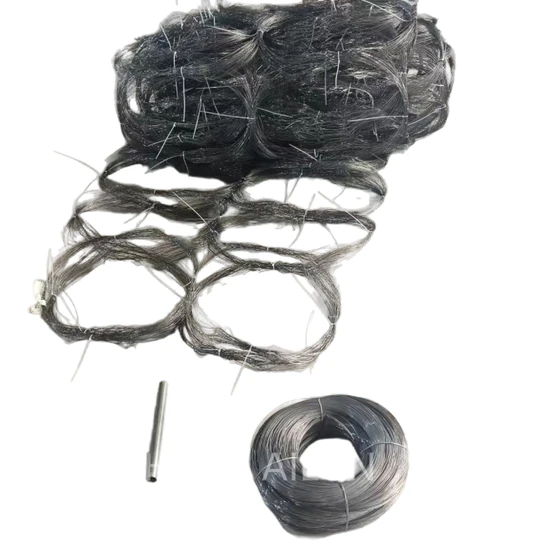
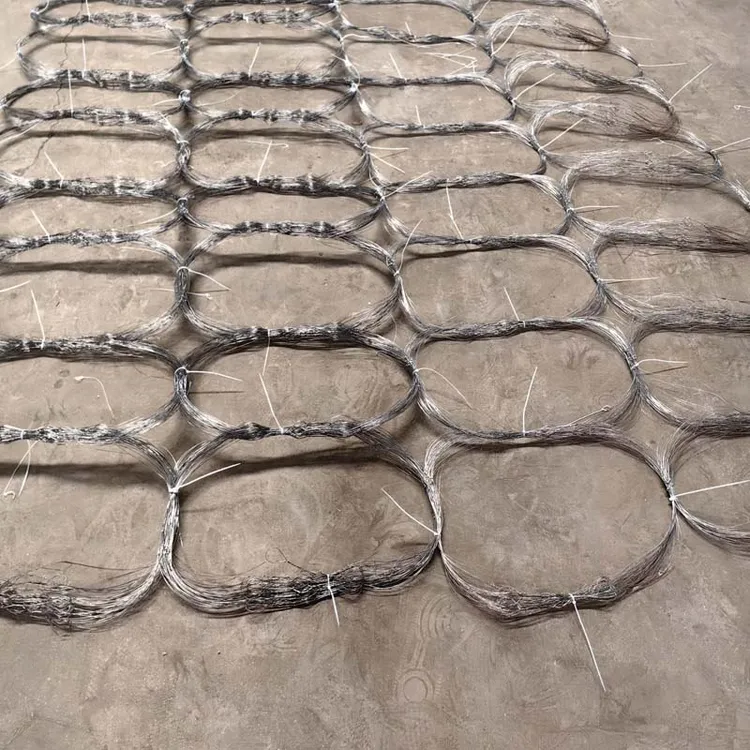
MZP Putanka (also known as PUTANKA anti-tank wire barrier) is a specialized type of anti-tank wire mesh featuring a unique 4-layer wound wire construction designed to entangle tank tracks and wheeled vehicle axles. Its complex manufacturing process makes it a higher-cost product compared to standard barrier nets.
| Specification | Standard PUTANKA | Heavy-Duty PUTANKA |
|---|---|---|
| Wire Diameter | 3.0 - 4.0 mm | 4.0 - 5.0 mm |
| Layer Construction | 4-layer wound | 4-layer wound + reinforcement |
| Standard Roll Size | 1.5 x 10 m | 1.5 x 15 m |
| Weight per Roll | 25-35 kg | 45-60 kg |
| FOB Price (per roll) | $180 - $280 | $350 - $550 |
| FOB Price (per m²) | $12 - $18 | $16 - $25 |
The higher cost for MZP Putanka compared to standard barrier nets reflects the additional manufacturing complexity—each roll requires precision winding of multiple wire layers to create the entanglement effect. The specialized production equipment and slower manufacturing throughput contribute to the premium pricing.
However, for military applications requiring a more effective vehicle entanglement barrier, the extra cost of MZP Putanka is justified by its superior immobilization capability. The cheap anti-tank wire mesh price for bulk order of PUTANKA barriers typically applies to orders of 500+ rolls, bringing the per-roll price down by 20-30%.
Concertina Wire & Razor Wire Barrier Pricing
Concertina wire and razor wire barriers represent a different category of anti-personnel and anti-vehicle barriers. While not always classified as "anti-tank" products, they are frequently deployed alongside anti-tank wire mesh in comprehensive defensive barrier systems.
| Product Type | Specification | Price Range (FOB per roll) |
|---|---|---|
| Single Coil Concertina Wire | 500 mm diameter, galvanized | $15 - $30 |
| Double Coil Concertina Wire | 500 mm diameter, galvanized | $25 - $50 |
| Razor Wire Barrier (Mobile) | 3.5 m length, tripod base | $80 - $150 |
| Razor Wire Barrier (Heavy) | 5.0 m length, reinforced base | $120 - $220 |
| Razor Wire Barrier (Military Grade) | NATO-spec, rapid deploy | $200 - $350 |
These products offer a cost-effective complement to anti-tank wire mesh for perimeter security. When evaluating total barrier system costs, procurement officers should consider that concertina and razor wire barriers are generally 60-80% cheaper than anti-tank barrier nets and can be deployed in multiple layers for enhanced protection.
For comprehensive military defense procurement, combining anti-tank barrier nets with concertina wire barriers creates a layered defense that addresses both vehicle and personnel threats at an optimized total cost. Many Chinese factories offer bundled pricing for combined orders of anti-tank wire mesh and concertina wire products, providing a better overall wholesale anti-tank wire mesh price for military packages.
Minimum Order Quantity (MOQ) & Price Tiers
Minimum Order Quantity (MOQ) is a critical consideration when planning anti-tank wire mesh procurement. Chinese factories typically set MOQs based on product type and manufacturing efficiency. Understanding these requirements helps procurement officers plan their purchasing strategy effectively.
| Product Type | Standard MOQ | Sample MOQ | Price Tier Impact |
|---|---|---|---|
| Anti-Tank Barrier Net (standard) | 50 rolls | 1-5 rolls | Sample: +15-25% premium |
| Anti-Tank Barrier Net (heavy duty) | 50 rolls | 1-5 rolls | Sample: +15-25% premium |
| MZP Putanka | 100 rolls | 2-5 rolls | Sample: +20-30% premium |
| Concertina Wire | 200 rolls | 10-20 rolls | Sample: +10-20% premium |
| Razor Wire Barriers | 100 units | 5-10 units | Sample: +15-25% premium |
For wholesale anti-tank wire mesh price for military procurement, meeting or exceeding standard MOQs unlocks the most favorable pricing tiers. Here is how pricing typically scales with order volume:
- Tier 1 (MOQ - 100 rolls): Standard wholesale price. Suitable for battalion-level deployment trials.
- Tier 2 (100 - 300 rolls): 10-15% discount. Brigade-level deployment quantity.
- Tier 3 (300 - 1000 rolls): 15-25% discount. Division-level procurement.
- Tier 4 (1000+ rolls): 25-40% discount. National stockpile or multi-year contract pricing.
Defense procurement agencies can optimize costs by consolidating orders across multiple units or combining product types into a single purchase order. Many Chinese factories are flexible on MOQ for first-time buyers who demonstrate potential for repeat business, though pricing for below-MOQ orders will be higher.
Anti-Tank Wire Mesh FOB Price per Square Meter Breakdown
Understanding the anti-tank wire mesh FOB price per square meter is essential for accurate budget planning and cross-supplier comparison. FOB (Free On Board) pricing includes the cost of goods, factory packaging, and delivery to the departure port in China, but excludes international shipping, insurance, and import duties.
The following table provides a detailed breakdown of FOB per-square-meter pricing for standard hot-dip galvanized products at container-level order volumes:
| Product Type | Wire Diameter | Coating | FOB Price per m² (USD) |
|---|---|---|---|
| Standard Barrier Net | 3.5 mm | HDG (80 µm) | $5.50 - $7.00 |
| Standard Barrier Net | 4.0 mm | HDG (100 µm) | $6.50 - $8.50 |
| Heavy-Duty Barrier Net | 4.5 mm | HDG (120 µm) | $9.00 - $12.00 |
| Military-Grade Barrier Net | 5.0 mm | HDG (120 µm) | $12.00 - $16.00 |
| MZP Putanka Standard | 3.5 mm | HDG (80 µm) | $12.00 - $18.00 |
| MZP Putanka Heavy | 4.5 mm | HDG (100 µm) | $16.00 - $25.00 |
When comparing FOB pricing across different suppliers, ensure you are comparing like-for-like specifications. A lower per-square-meter price from one supplier may indicate lighter wire gauge, thinner coating, or lower tensile strength steel—all of which reduce performance in field conditions.
For the most accurate budgeting, request FOB pricing from multiple Chinese manufacturers with identical specification sheets. This allows you to evaluate both pricing and quality standards objectively. The anti-tank wire mesh price list from China factory typically specifies FOB Shanghai, Ningbo, or Guangzhou as the departure port, with inland factories sometimes offering FOB Tianjin or Qingdao.
Why Choose Chinese Factory Direct Pricing?
Chinese factories have established themselves as the world's leading producers of anti-tank wire mesh, offering compelling anti-tank wire mesh factory direct price advantages that make them the preferred sourcing destination for defense procurement worldwide. Understanding these advantages helps procurement officers justify their sourcing decisions.
Price Comparison: Chinese Factory vs European Suppliers
When comparing anti-tank wire mesh pricing between Chinese factories and European or American suppliers, the cost difference is substantial. European manufacturers (Germany, UK, Poland) and US suppliers typically charge significantly higher prices due to higher labor costs, stricter environmental regulations, and lower production volumes.
| Product Specification | Chinese Factory Price (FOB) | European Supplier Price | US Supplier Price |
|---|---|---|---|
| Standard Barrier Net 4.0 mm HDG | $6.50 - $8.50/m² | $15 - $25/m² | $20 - $35/m² |
| Heavy-Duty Barrier Net 5.0 mm HDG | $12 - $16/m² | $28 - $40/m² | $35 - $55/m² |
| MZP Putanka 4.0 mm HDG | $14 - $20/m² | $30 - $50/m² | $45 - $70/m² |
| Concertina Wire (per roll) | $15 - $50 | $40 - $120 | $60 - $180 |
The price advantages of Chinese factories stem from several structural factors:
- Vertical integration: Major Chinese wire mesh manufacturers control the entire production chain from steel wire rod drawing to final galvanizing and weaving, eliminating middleman markups.
- Economies of scale: Chinese factories produce anti-tank wire mesh in volumes that far exceed European or American producers, spreading fixed costs across more units.
- Modern manufacturing technology: Leading Chinese factories have invested in automated weaving and galvanizing lines that reduce labor costs while maintaining consistent quality.
- Competitive raw material access: China is the world's largest steel producer, giving domestic manufacturers access to competitively priced raw materials.
Even after adding international shipping (approximately $2,000-4,000 for a 20 ft container to most destinations), the total landed cost from Chinese factories remains 40-60% lower than equivalent products from Western suppliers. This makes China the optimal sourcing destination for cost-conscious defense procurement.
Factory Direct Price Advantages
Purchasing directly from Chinese factories offers several distinct advantages beyond lower unit prices. These benefits make the anti-tank wire mesh factory direct price model particularly attractive for military procurement:
- No middleman markup: Factory-direct purchasing eliminates distributor and trading company margins, typically saving 15-30% compared to buying through intermediaries.
- Direct quality control: Buyers can request factory audits, video inspections, and third-party quality testing (SGS, BV, Intertek) to verify product specifications before shipment.
- Custom production runs: Direct factory relationships allow for custom specifications, private labeling, and tailored packaging that would be difficult or expensive through distributors.
- Better communication: Modern Chinese factories employ English-speaking export teams that provide direct technical support, production updates, and shipping documentation.
- Flexible payment terms: Established factories offer flexible payment terms including T/T (30% deposit, 70% before shipment), L/C at sight, and for long-term partners, open account terms.
To access the true anti-tank wire mesh factory direct price, buyers should contact factories directly rather than through B2B platforms that may list prices from trading companies. Verifying the factory's manufacturing license and export credentials ensures you are dealing with a legitimate producer rather than an intermediary marking up prices.
Many Chinese anti-tank mesh manufacturers also offer value-added services including product certification documentation, military specification compliance testing, and logistical support for international shipping—all included in the factory direct price.
How to Get a Quote for Anti-Tank Wire Mesh Bulk Order
Obtaining an accurate quote for your anti-tank wire mesh bulk order requires clear communication of your requirements. Chinese manufacturers need specific information to provide precise pricing. This section guides you through the inquiry process.
The key question "How to get a quote for anti-tank wire mesh bulk order?" is one of the most common inquiries from defense procurement officers. Following a structured approach ensures you receive competitive, accurate quotes from multiple suppliers.
Step-by-Step Inquiry Process
The process of obtaining a quote for anti-tank wire mesh bulk order follows a standard procurement flow. Following these steps ensures you receive comprehensive and competitive pricing from Chinese manufacturers:
- Identify qualified suppliers: Research Chinese manufacturers with verified export experience in military-grade wire mesh products. Look for factories with ISO 9001 certification, export licenses, and a track record of defense contracts. Request company profiles and factory audit reports.
- Prepare a detailed RFQ (Request for Quotation): Create a standardized specification sheet covering all technical requirements. Send the same RFQ to 3-5 suppliers to enable apples-to-apples comparison. Include your delivery timeline and preferred shipping terms.
- Review and compare quotes: Evaluate quotes not just on unit price but on total cost including packaging, documentation fees, and incoterms. Request detailed breakdowns of what each quote includes.
- Request samples: For first-time purchases, request production samples to verify quality before committing to large orders. Sample costs are typically deductible from the first bulk order.
- Negotiate terms: Discuss pricing, payment terms, delivery schedule, and quality assurance provisions. Use competing quotes as leverage while maintaining professional relationships.
- Place trial order: Start with a trial order at standard MOQ to evaluate product quality, packaging, and delivery performance before scaling up.
Information to Prepare for Accurate Quoting
To receive accurate pricing that reflects your actual procurement needs, prepare the following information before contacting suppliers. This preparation ensures suppliers can quote accurately on the first attempt, saving time and reducing back-and-forth communication.
| Information Required | Why It Matters |
|---|---|
| Product type and specifications | Barrier net, MZP Putanka, or concertina wire — each has different production requirements and pricing |
| Wire diameter (mm) | Determines steel content and production difficulty; directly impacts per-unit cost |
| Mesh aperture size | Affects material usage per square meter and manufacturing speed |
| Coating type and thickness | HDG, PVC, or stainless steel — each has different material costs and processing requirements |
| Roll dimensions (width x length) | Determines total square meters and influences packaging and container loading |
| Total quantity ordered | Volume determines which pricing tier applies and affects per-unit cost significantly |
| Packaging requirements | Standard export packing vs. military-spec waterproof/crate packaging |
| Destination port | Influences shipping cost calculation and documentation requirements |
| Required certifications | Material test certificates, mill certificates, or third-party inspection reports |
| Delivery timeline | Rush orders may incur expedited production fees; standard lead times offer better pricing |
Once you have gathered this information, you can request a formal quotation including the anti-tank wire mesh price list from China factory. Most reputable manufacturers will respond within 24-48 hours with a detailed commercial offer including FOB pricing, estimated shipping costs, and production lead time.
For government and military procurement, many Chinese factories can provide the necessary export documentation and compliance certificates required for defense contracting. Always confirm the supplier's ability to provide these documents before proceeding with the order.
Conclusion: Getting the Best Value on Your Anti-Tank Wire Mesh Purchase
Understanding anti-tank wire mesh pricing is essential for successful military procurement. The key takeaways from this guide are:
- Prices vary by specification: Wire gauge, coating type, and product type are the primary cost drivers. Standard galvanized barrier nets start at $5.50/m² FOB, while military-grade MZP Putanka ranges from $14-25/m².
- Volume drives savings: Bulk orders of 500+ rolls can achieve 30-40% discounts compared to small orders. Consolidating procurement across units or combining product types maximizes savings.
- Chinese factories offer the best value: Factory-direct pricing from Chinese manufacturers is typically 50-70% lower than equivalent products from European or American suppliers, even after international shipping costs.
- Be specific in your RFQ: Providing detailed specifications helps suppliers quote accurately and reduces the risk of receiving non-compliant products. The more information you provide, the more competitive and accurate your quotes will be.
- Sample before scaling: Always verify product quality through samples or factory inspections before committing to large-volume orders. The cost of samples is negligible compared to the risk of receiving non-conforming products.
For procurement officers seeking the best value, the combination of Chinese factory direct sourcing with bulk ordering provides the most favorable pricing. Whether you need standard anti-tank barrier nets, specialized MZP Putanka barriers, or comprehensive barrier system packages, understanding the pricing factors outlined in this guide will help you negotiate effectively and secure the best possible terms for your defense procurement needs.
To get started, prepare your specifications and reach out to verified Chinese manufacturers for current pricing and lead time information. The anti-tank wire mesh FOB price per square meter you ultimately pay will depend on how well you align your requirements with standard production specifications and volume commitments.
![Anti-Tank Barriers Buyer's Guide: Types, Costs & Military Procurement [2026]](/images/anti-tank-barriers-hero.webp)