Introduction
When it comes to securing military installations, forward operating bases, and strategic defensive positions, few obstacles are as critical as military anti tank barriers for sale. These heavy-duty obstacles are designed to stop, delay, or redirect armored vehicles and main battle tanks, giving defenders precious time to engage targets and control the battlefield.
Whether you are a defense procurement officer, a military engineer, or a security consultant, understanding the types, costs, and purchasing options for anti-tank barriers is essential to making an informed investment. This comprehensive buyers guide covers everything from concrete dragon\u2019s teeth and steel hedgehogs to modern wire mesh anti-tank nets, helping you choose the right solution for your specific defense requirements.
In this guide, we answer the most common questions: Where can I find military anti tank barriers for sale? How much do they cost? Which manufacturers are reliable? And most importantly, how do you select the right barrier for your mission profile?
What Are Military Anti Tank Barriers?
Military anti tank barriers are engineered obstacles designed to stop or impede the advance of armored fighting vehicles, including main battle tanks, infantry fighting vehicles, and armored personnel carriers. These barriers function through one or more of three core mechanisms: physical immobilization (trapping the vehicle), structural penetration (damaging the undercarriage or tracks), or psychological deterrence (creating a visible obstacle that forces route changes).
Modern defense doctrine classifies anti-tank barriers into two broad categories: permanent and expedient. Permanent barriers include reinforced concrete structures like dragon\u2019s teeth and concrete walls, intended for long-term border defense and hardened installations. Expedient barriers, such as wire mesh anti-tank nets, concertina wire obstacles, and portable steel hedgehogs, are deployable systems that can be transported and installed quickly in response to emerging threats.
An important distinction in today\u2019s market is between traditional heavy barriers (concrete and steel) and lightweight, transportable alternatives. While concrete barriers offer unmatched permanence, modern anti tank obstacle nets for sale provide rapid deployment capabilities that are increasingly valued in contemporary asymmetric warfare scenarios. These mesh-based barriers can be stored flat, transported in standard military vehicles, and deployed by small teams without heavy lifting equipment.
Types of Military Anti Tank Barriers Available for Sale
The market offers several distinct types of military anti tank barriers for sale, each with unique design principles, material compositions, and tactical applications. Understanding these categories is essential for defense procurement professionals evaluating barrier options. Below we examine the four primary types available on the global market today.
Concrete Dragon\u2019s Teeth Barriers
Concrete dragon\u2019s teeth are among the most recognizable military anti tank barriers in existence. These pyramid-shaped concrete blocks, typically 36 to 48 inches tall, are arranged in staggered rows to create a dense obstacle field that immobilizes armored vehicles. Their sloped design forces tanks to climb and become high-centered, leaving their vulnerable underbelly exposed.
Key specifications:
| Parameter | Typical Value |
|---|---|
| Height | 36\u201348 inches (0.9\u20131.2 m) |
| Base width | 48\u201360 inches (1.2\u20131.5 m) |
| Concrete grade | C30/C35 reinforced |
| Weight per unit | 2,000\u20136,000 lbs (900\u20132,700 kg) |
| Service life | 50+ years |
Dragon\u2019s teeth are ideal for border fortifications, permanent defensive lines, and critical infrastructure protection. Their primary advantage is extreme durability and virtually zero maintenance. However, they are expensive to transport and require heavy construction equipment for installation. Pre-cast dragon\u2019s teeth are available from multiple concrete barrier manufacturers worldwide, with pricing typically quoted per unit plus delivery.
Steel Czech Hedgehog Barriers
The steel Czech hedgehog, also known as a \u201C\u017eeb\u0159\u00edk\u201D or \u201Ctetrahedron,\u201D is a historic yet still widely used anti-tank barrier design. Constructed from three intersecting steel beams or rails welded at the center, the hedgehog is designed to be lightweight enough for manual handling yet strong enough to damage tank tracks and hulls on impact.
Typical specifications:
| Parameter | Typical Value |
|---|---|
| Material | Steel rail / I-beam / heavy pipe |
| Arm length | 4\u20136 ft (1.2\u20131.8 m) |
| Weight | 350\u2013700 lbs (160\u2013320 kg) |
| Corrosion protection | Hot-dip galvanized or painted |
| Deployment | Manual placement, no tools required |
Modern steel hedgehogs are typically hot-dip galvanized for corrosion resistance, making them suitable for long-term outdoor deployment in all climates. They are often sold in palletized quantities for bulk defense projects. Many manufacturers offer folding or collapsible hedgehog designs for easier storage and transport. As a cost-effective Defensive Barrier for sale, the Czech hedgehog remains popular among military forces worldwide.
Anti-Tank Wire Mesh and Net Barriers
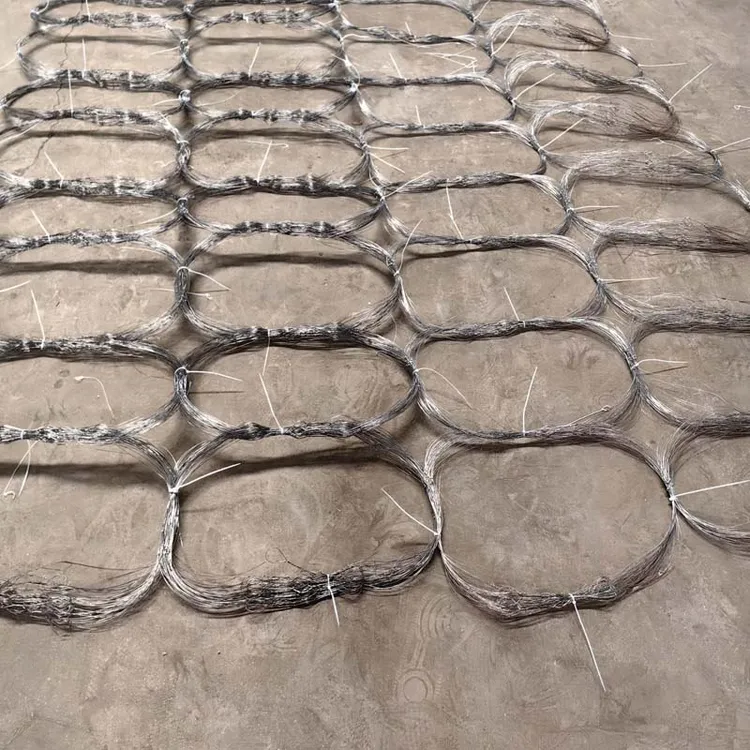
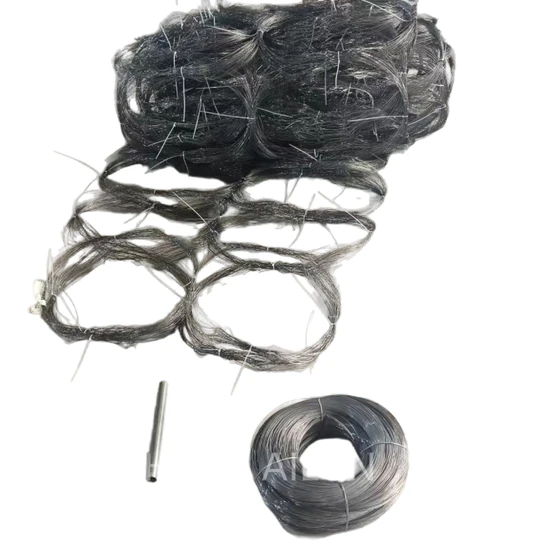
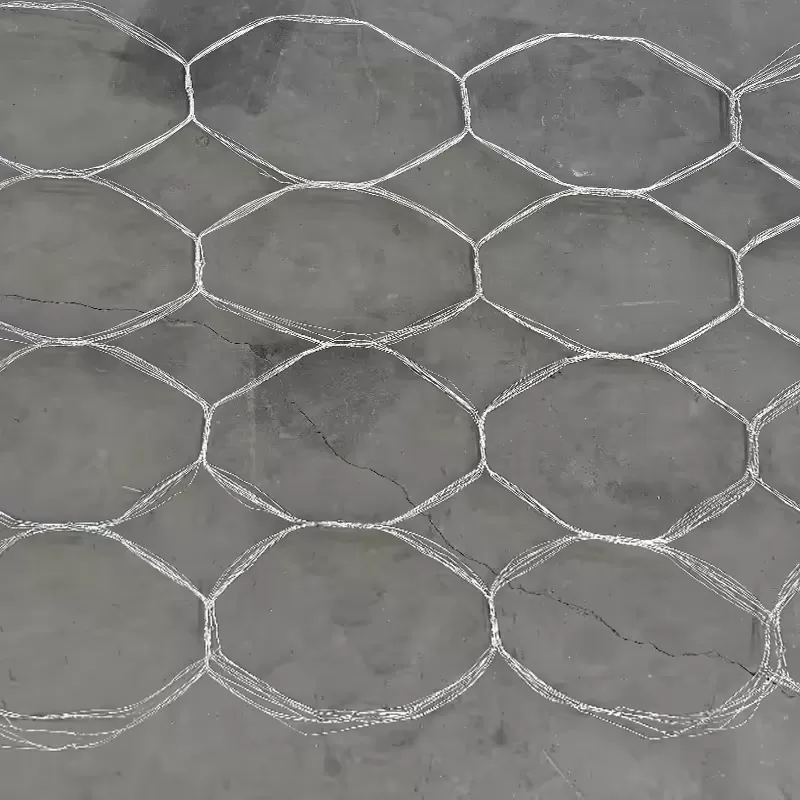
Anti-tank wire mesh and net barriers represent the latest evolution in portable military anti tank barriers. Constructed from high-tensile galvanized steel wire woven into a heavy-duty mesh, these barriers are designed to entangle tank tracks and running gear, effectively immobilizing the vehicle. Unlike rigid concrete or steel barriers, wire mesh obstacles can be rolled up, transported in standard vehicle cargo areas, and deployed in minutes.
Typical specifications for anti-tank wire mesh:
| Parameter | Typical Value |
|---|---|
| Wire diameter | 4.0\u20136.0 mm (galvanized) |
| Mesh aperture | 80\u2013150 mm diamond |
| Roll dimensions | 0.9\u20132.0 m x 10\u201325 m |
| Tensile strength | 500\u2013700 N/mm\u00b2 |
| Weight per roll | 40\u201380 kg |
| Corrosion protection | Hot-dip galvanized (G90/G140) |
These barriers are particularly effective when deployed in layers: a row of anti-tank mesh backed by concertina wire creates a formidable multi-layer obstacle system. Many defense procurement specialists now prioritize anti tank obstacle nets for sale for rapid response scenarios, as these can be airdropped or heli-delivered and deployed by small teams. Major Chinese manufacturers like Hebei KN Wire Mesh Co., Ltd. have become leading suppliers of military-grade anti-tank wire mesh, offering competitive pricing for bulk government contracts.
Anti-Tank Ditches and Berms
Anti-tank ditches and berms are the most basic yet still widely employed form of anti-tank obstacle. A standard anti-tank ditch is a V-shaped or trapezoidal excavation 3\u20135 meters wide and 2\u20133 meters deep, designed to trap tanks that attempt to cross. Berms are raised earth mounds constructed parallel to the ditch on the friendly side, providing additional cover for defenders.
While these require significant earthmoving equipment and labor to construct, they offer the advantage of using locally available materials. For temporary defensive positions, modern military engineers combine ditches with military anti tank barriers for sale such as wire mesh obstacles placed in the ditch bottom to enhance the obstacle\u2019s effectiveness. Hybrid defenses combining earthworks with manufactured barriers are often the most cost-effective solution for large perimeter security projects.
Military Anti Tank Barriers Cost: Pricing Breakdown
Understanding the cost of military anti tank barriers for sale is critical for defense budgeting. Prices vary significantly based on barrier type, material, quantity, and shipping logistics. Below is a general pricing overview based on current market data from major manufacturers and suppliers.
| Barrier Type | Estimated Unit Price (USD) | Key Cost Factors |
|---|---|---|
| Concrete dragon\u2019s teeth | $150\u2013$400 per unit | Reinforcement, mold cost, transport weight |
| Steel Czech hedgehog | $80\u2013$250 per unit | Steel price, galvanizing, weld quality |
| Anti-tank wire mesh (per roll) | $60\u2013$180 per roll | Wire gauge, galvanization, roll dimensions |
| Anti-tank ditch construction | $10\u2013$30 per linear meter | Soil type, equipment, labor rates |
Additional cost considerations:
- Shipping and logistics: Heavy barriers like concrete dragon\u2019s teeth incur significant freight costs. International shipping from Asian manufacturing hubs can add 20\u201340% to the base product price.
- Bulk discounts: Most manufacturers offer tiered pricing for orders exceeding 500 units (for concrete/steel) or 1,000 rolls (for wire mesh). Government procurement contracts typically receive the most favorable pricing.
- Installation costs: Concrete barriers require crane or excavator placement. Wire mesh barriers can be installed by hand, saving significant deployment costs.
- Maintenance: Galvanized steel products require minimal maintenance, while concrete barriers may need occasional crack repair in freeze-thaw climates.
For the most accurate pricing on military anti tank barriers for sale, request a formal quotation from at least three manufacturers. Price negotiation is standard practice in this industry, especially for multi-year supply agreements.
Where to Find Military Anti Tank Barriers for Sale
Finding military anti tank barriers for sale requires knowing where to look and how to evaluate potential suppliers. The global market for defensive barriers includes specialized defense contractors, construction material manufacturers, and wire mesh producers. Below are the primary channels for purchasing anti-tank barriers.
1. Specialized defense manufacturers
Companies like Hebei KN Wire Mesh Co., Ltd., Bekaert, and Van Merksteijn produce military-specification anti-tank barriers. These manufacturers typically supply government contracts but also work with qualified defense contractors and security firms. They can provide technical specifications, certification documents, and samples for evaluation.
2. Direct from Chinese manufacturers
China has emerged as the largest manufacturing hub for anti-tank wire mesh and steel barriers. Anti Tank Barrier products from Chinese manufacturers offer competitive pricing, especially for bulk orders. When sourcing from Chinese suppliers, verify certifications, request material test reports, and consider using a third-party inspection service. Many Chinese manufacturers maintain dedicated export teams for military and government contracts.
3. Defense procurement platforms
Government procurement portals and defense industry trade shows are excellent sources for finding vetted suppliers. Platforms like Defense Logistics Agency (DLA) procurement, UNGM (United Nations Global Marketplace), and industry events like IDEX, Eurosatory, and DSEI connect buyers with certified manufacturers of Military Barriers and other defensive equipment.
4. Industrial construction suppliers
Large-scale construction material suppliers and concrete barrier manufacturers often stock barrier molds and pre-cast anti-tank barriers. While these suppliers may not specialize in defense products, they can manufacture to military specifications and deliver locally, reducing shipping costs. They are a good source for standard Military Barriers for fixed installation projects.
Supplier evaluation checklist:
- ISO 9001 quality management certification
- Material test certificates (tensile strength, galvanization thickness)
- Previous government/military contract references
- Export compliance and ITAR/EAR knowledge
- Sample availability for destructive testing
- Packaging and marking for military logistics
How to Choose the Right Military Anti Tank Barrier for Your Defense
Choosing the right military anti tank barriers for sale requires a systematic evaluation of your operational requirements, terrain conditions, and budget constraints. Here is a step-by-step framework for defense procurement decision-making.
Step 1: Define the threat level
Assess the types of armored vehicles the barrier must stop. Main battle tanks (60\u201370 tons) require heavier barriers than light armored vehicles (10\u201320 tons). For tank-level threats, reinforced concrete dragon\u2019s teeth or heavy steel hedgehogs are recommended. For lighter vehicles, anti-tank wire mesh may provide sufficient stopping power at a fraction of the cost.
Step 2: Evaluate deployment timeline
Permanent defensive positions with months of preparation time can accommodate concrete barriers. Rapid deployment scenarios, such as forward operating base security or emergency reinforcement, call for portable solutions like anti tank obstacle nets for sale or steel hedgehogs that can be installed in hours, not weeks.
Step 3: Consider terrain and soil conditions
Rocky or frozen ground makes ditch excavation impractical, favoring above-ground barriers. Soft soil may require additional foundation work for concrete barriers. Wire mesh barriers are terrain-agnostic and can be deployed on any surface using anchor stakes.
Step 4: Calculate total cost of ownership
Beyond the purchase price, factor in:
- Transportation costs (weight and volume)
- Installation labor and equipment
- Storage requirements (flat-foldable barriers save warehouse space)
- Maintenance and lifespan
- Relocation/reuse potential
Step 5: Verify manufacturer reliability
Request references from previous military buyers, check export compliance documentation, and, if possible, conduct a factory audit. Chinese manufacturers like Hebei KN Wire Mesh Co., Ltd. offer factory inspection tours and can provide batch test certificates for wire mesh tensile strength and galvanization quality.
Comparison of barrier types by selection criteria:
| Selection Factor | Concrete Dragon\u2019s Teeth | Steel Hedgehog | Wire Mesh Barrier |
|---|---|---|---|
| Deployment speed | Slow (weeks) | Fast (hours) | Very fast (minutes) |
| Transportability | Poor (very heavy) | Moderate | Excellent (rollable) |
| Cost per linear meter | High | Medium | Low |
| Mobility impact | Cannot be moved | Relocatable | Reusable |
| Lifespan | 50+ years | 20\u201330 years | 10\u201320 years |
Conclusion
Selecting the right military anti tank barriers for sale is a critical defense procurement decision that impacts operational readiness and force protection. From permanent concrete dragon\u2019s teeth and classic steel Czech hedgehogs to modern anti-tank wire mesh barriers, each type offers distinct advantages depending on your mission profile, timeline, and budget.
Key takeaways from this guide:
- Concrete barriers offer maximum permanence but high transport costs and slow deployment.
- Steel hedgehogs provide a balanced middle ground with good durability and moderate cost.
- Anti-tank wire mesh delivers the fastest deployment and lowest total cost of ownership for rapid response scenarios.
- Always obtain multiple quotes, verify manufacturer certifications, and factor in total cost of ownership including shipping and installation.
For defense procurement officers and security professionals seeking reliable military anti tank barriers for sale, we recommend starting with a clear requirements document, contacting at least three qualified manufacturers for quotations, and requesting material samples for testing. The right barrier investment today will provide decades of protective value for your defensive positions.