What Are Anti-Tank Barriers?
Agree: If you are evaluating defensive obstacles for a military installation, border crossing, or forward operating base, you have seen the options — concrete teeth, steel hedgehogs, wire mesh nets, excavated ditches. The problem is not a lack of choices. It is knowing which one fits your mission profile, terrain, timeline, and budget.
Promise: By the end of this guide, you will be able to match any defensive requirement to the right barrier type — with real specs, real costs, and real deployment data from a manufacturer that supplies 30+ defense forces worldwide.
Preview: We cover all five major types, compare them head-to-head on cost and effectiveness, explain the physics behind each stopping mechanism, and give you the procurement information you need to request a factory quote today.
An anti-tank barrier is any physical obstacle designed to stop, delay, or channel armored fighting vehicles. The five primary types used by modern militaries are: Dragon's Teeth (concrete), Czech Hedgehogs (steel), Tank Barrier Nets (wire mesh), MZP Putanka (low-visibility wire), and Anti-Tank Ditches (earthwork). Each works on a different physical principle and suits different tactical scenarios.
The Five Types of Anti-Tank Barriers
Dragon's Teeth
Pyramid-shaped reinforced concrete obstacles, 0.9-1.5m tall, arranged in staggered rows. Forces tanks to climb at severe angle exposing belly armor, or attempt to push through causing track damage.
Czech Hedgehog
Three steel I-beams welded at center to form six-pointed star. Rolls under tank hull when driven over, lifting tracks off ground and immobilizing vehicle.
Tank Barrier Net
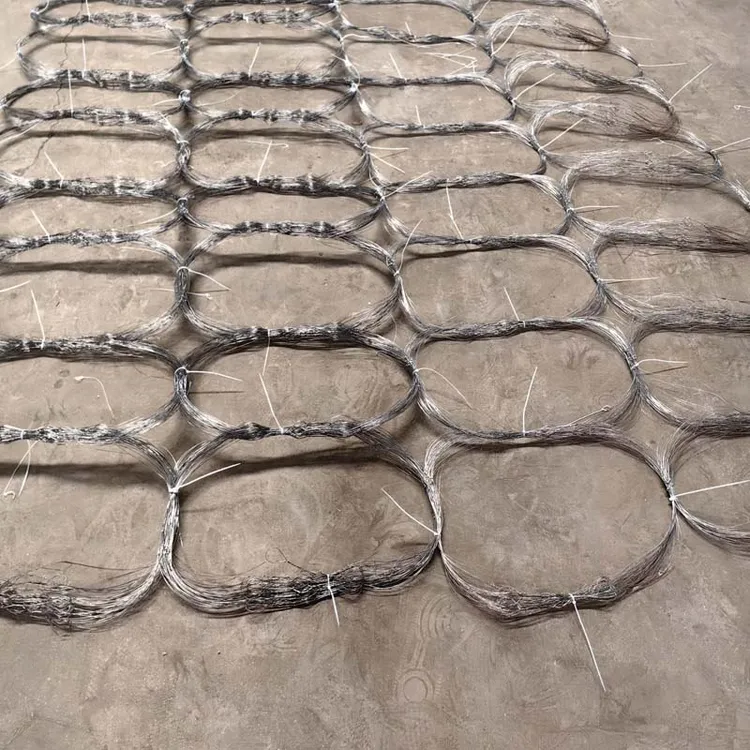
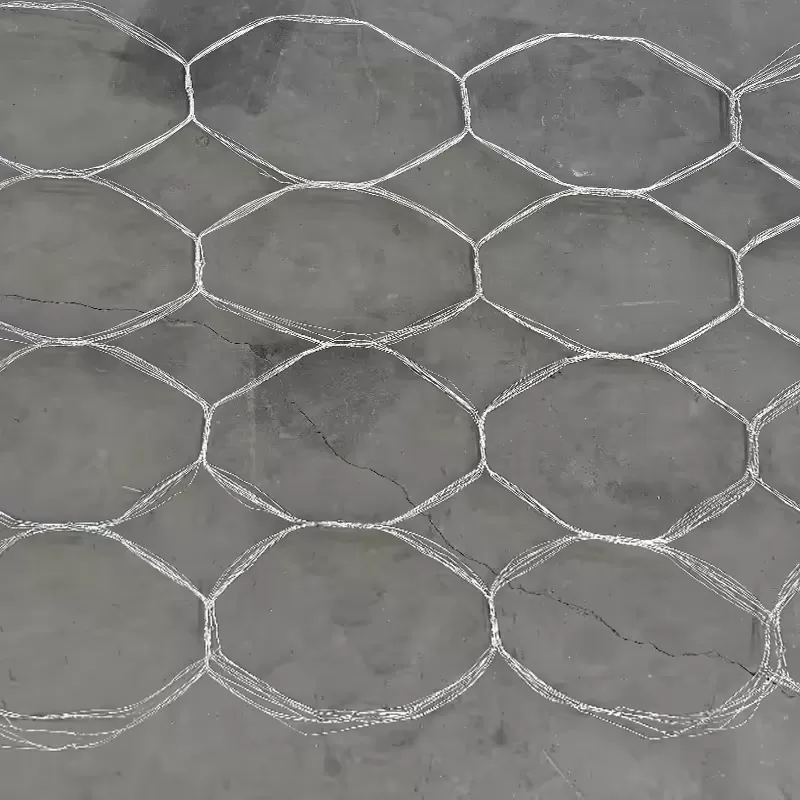
Galvanized steel wire mesh, 4.0-6.0mm wire. Track entanglement — wires wrap around drive sprockets and jam track mechanism. Best balance of portability and stopping power.
MZP Putanka
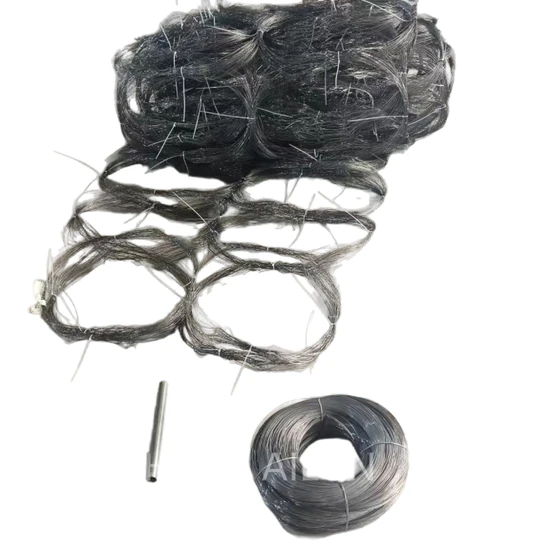
4-layer progressive wound wire, 0.5-0.9mm. Invisible entanglement — wires wrap around axles and tracks. Combat-proven in Ukraine. Single-soldier deployable.
Anti-Tank Ditch
Excavated trenches 12-20 ft wide, 6-10 ft deep with vertical or reinforced sides. Exceeds tank trench-crossing capability (typically 8-10 ft). Most effective when combined with water saturation to create bogging conditions that no vehicle can cross.
How Each Barrier Type Stops a Tank
The key difference: not all barriers work the same way. Understanding the mechanism matters for procurement because it determines what vehicle types a barrier can stop.
- Vertical Obstruction — Dragon's Teeth, Concrete Walls, Ditches
Present a face exceeding the vehicle's climbing or trench-crossing capability. MBTs can typically climb 25-35 degree slopes and cross 8-10 ft gaps. Barriers exceeding these limits force the vehicle to stop.
- Track Entanglement — Tank Barrier Nets, MZP Putanka
High-tensile wires wrap around drive sprockets, road wheels, and idler wheels. Passive-mobility kill — the barrier does not absorb impact force, it uses the vehicle's own momentum to jam the track mechanism.
- Hull Lifting and Penetration — Czech Hedgehogs
Steel beams roll under the vehicle hull when driven over, lifting tracks off the ground. Pointed beam ends can penetrate belly armor — the thinnest armor surface on any MBT.
Anti-Tank Barriers in Modern Warfare
Modern warfare has not made anti-tank barriers obsolete — it has changed how they are used. The key shift: from standalone fortifications to integrated obstacle systems that combine physical barriers with surveillance, indirect fire, and anti-tank guided missiles. A barrier's job is no longer to stop a tank permanently. It is to slow it down long enough for a weapons team to engage.
Selecting the Right Anti-Tank Barrier
| Factor | Dragon's Teeth | Czech Hedgehog | Tank Barrier Net | MZP Putanka | Ditch |
|---|---|---|---|---|---|
| Stopping Power | |||||
| Deploy Speed | |||||
| Cost Efficiency | |||||
| Best For | Strategic chokepoints | Urban/seaport defense | Perimeter/FOB/border | Covert ops/ambush | Layered defense belts |
Pricing and Procurement
| Barrier Type | Unit | Cost Range | Deploy | Life |
|---|---|---|---|---|
| Dragon's Teeth | per tooth | $150-500 | Days | 50+ yr |
| Czech Hedgehog | per unit | $200-800 | Hours | 20-40 yr |
| Tank Barrier Net | per roll | $80-220 | <10 min | 15-25 yr |
| MZP Putanka | per section | $100-300 | <5 min | 5-10 yr |
| Anti-Tank Ditch | per linear m | $200-800 | Days | Variable |
Trusted by Defense Forces
"TrackSnare anti-tank nets exceeded our specifications. Galvanization quality is outstanding. Delivery ahead of schedule."
Michael K.
Procurement Officer, National Defense Logistics
"Sourced for three major border security projects. Product consistency and export documentation first-class."
Col. Ahmed R.
Border Security Director
"Technical support made procurement seamless. Provided samples, test reports, coordinated express shipping."
James D.
Security Infrastructure Manager
FAQ
Physical obstacles designed to stop, delay, or channel armored vehicles. Five main types: Dragon's Teeth (concrete), Czech Hedgehogs (steel), Tank Barrier Nets (wire mesh), MZP Putanka (low-visibility wire), and Anti-Tank Ditches (earthwork).
Depends on mission. Permanent fortification → Dragon's Teeth (95% stopping power). Rapid deployment → Tank Barrier Net (80%, under 10 min). Covert ops → MZP Putanka (80%, under 5 min, invisible).
Dragon's Teeth $150-500/tooth, Czech Hedgehogs $200-800/unit, Tank Barrier Nets $80-220/roll, MZP Putanka $100-300/section, Ditches $200-800/meter. Volume discounts for bulk orders.
Pyramid-shaped concrete obstacles force tanks to climb at severe angles exposing vulnerable belly armor. Tanks attempting to push through risk track damage and immobilization.
Yes — extensively in Ukraine (2022-2026). Dragon's Teeth on defensive lines, MZP Putanka for road ambushes, Tank Barrier Nets for FOB protection. Modern barriers integrated with ATGMs, drones, and surveillance.
TrackSnare Engineering Team — ISO 9001:2015 · ASTM A641 · 25+ years · 15,000 m2 factory · 30+ countries · Request your factory quote →